MENU
BR | BRL

BR | BRL
-
- Todas as centrífugas
- Centrífugas de bancada
- Centrífugas de chão
- Centrífugas refrigeradas
- Microcentrífugas
- Centrífugas multifuncionais
- Centrífugas de alta velocidade
- Ultracentrífugas
- Concentrador
- Consumíveis de alta velocidade e de ultracentrifugação
- Tubos de centrifugação
- Placas de centrifugação
- Software de gestão de equipamentos
- Gestão de amostras e informações
-
- Todas as pipetas, dispensadores e equipamentos para manuseio de líquidos automatizados
- Pipetas mecânicas
- Pipetas eletrônicas
- Pipetas multicanal
- Pipetas de deslocamento positivo e dispensadores
- Ponteiras de pipeta
- Dispensadores de frascos
- Controladores de pipeta
- Acessórios para dispensadores e pipetas
- Pipetagem Automatizada
- Consumíveis de automação
- Acessórios de automação
- Serviços para pipetas e equipamentos para manuseio de líquidos
Sorry, we couldn't find anything on our website containing your search term.
Sorry, we couldn't find anything on our website containing your search term.
Save Plastic, Stay Safe
JAN-HENDRIK BEBERMEIER
Despite the quest for sustainability, the safety of both the scientist and the samples remains paramount in the laboratory. Although there are good initial ideas, lab waste can still not be recycled efficiently at this time because, for example, regulatory requirements stipulate that it be disposed of as biohazardous waste. How can one at least reduce this type of waste?
This article appeared first in BioNews, Eppendorf’s customer magazine since 1993.
Read more
Read less
In many laboratories, there is no way around disposable tips and tubes, which creates large amounts of biologically or chemically contaminated plastic waste. Innovative recycling concepts are still a long time coming; however, through clever product selection, you can start reducing the amount of plastic used in the laboratory today.
Specific examples
A final suggestion
Any object that comes into contact with the bench surface in the laboratory is to be considered contaminated. This risk of contamination also jeopardizes the recycling of packaging material. For this reason, products such as tip boxes should be separated from the packaging material in such a way that they remain “clean”. After all, cardboard, plastic lids or bags are valuable raw materials. Collect them in the appropriate collection bins at your organization.
Specific examples
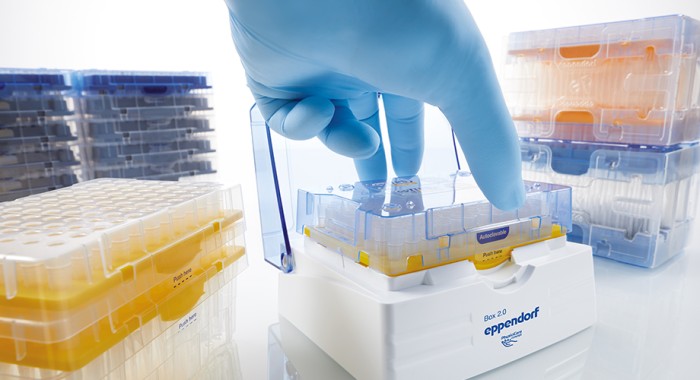
- Reload pipette tips: for the past two decades, our epT.I.P.S.® refill system consisting of box and reloads has already been available as a plastic-saving refill system. More about our all-round optimized epT.I.P.S. Box 2.0 at www.eppendorf.com/epTIPS-News
- In many cases, a vessel with a smaller volume is sufficient! Changing from 15 mL to 5 mL or from 50 mL to 25 mL reduces plastic waste by half and doubles the storage capacity in the ULT freezer. More information at www.eppendorf.com/5mL and www.eppendorf.com/25mL
A final suggestion
Any object that comes into contact with the bench surface in the laboratory is to be considered contaminated. This risk of contamination also jeopardizes the recycling of packaging material. For this reason, products such as tip boxes should be separated from the packaging material in such a way that they remain “clean”. After all, cardboard, plastic lids or bags are valuable raw materials. Collect them in the appropriate collection bins at your organization.
Read more
Read less